Playing, Part 1 · Chapter 3: Notation and Rhythms
Middle C and Ledger Lines
Now we come back to the note middle C, which I mentioned earlier. It turns out that this note is just a little below the treble clef, and just a little above the bass clef. So we need to extend the clefs by adding another small staff line (known as a ledger line) to accommodate this note:
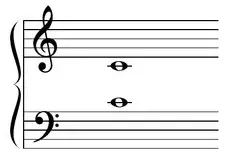
It's important to understand that both of the notes shown above are actually middle C. We know that the bottom line note in the treble clef is E. Well, if we go down one letter name to D, this note would sit right below the bottom staff line, and then one further note down to C would need an extra staff line below, which is exactly what the ledger line is. Similarly, we know that the top line note in the bass clef is A. Then if we go up one letter name to B, this note would sit right above the top staff line, and then one further note up to C would again need the extra staff line or ledger line.
Middle C is both the first ledger line below the treble clef, and the first ledger line above the bass clef. This important relationship will help you get oriented to the grand staff.