Playing, Part 2 · Chapter 12: More Chords and Inversions
Voice Leading Between Inversions
Voice leading is a term used to describe the melodic lines created as one “voice” of a chord leads to the next chord. For example, when going from a C chord to an F chord, to a G chord (chords using only three notes each), the “line” created by the middle voice of each chord is a kind of melody in itself. How the middle voice in one chord leads to the middle voice in the next chord is what voice leading is all about. This is just one example, but the line does not always have to be connecting only the middle voices of chords (especially with larger chords that have multiple “middle” voices). “Proper” voice leading will help chord progressions sound smooth and continuous. This is largely achieved when the melodic lines travel mostly by steps, without “jumping around” all over the place. Using inversions helps to promote proper voice leading for a smooth flowing sound. In working through some voice leading examples, we’ll revisit “Beauty and the Beast” from the last chapter.
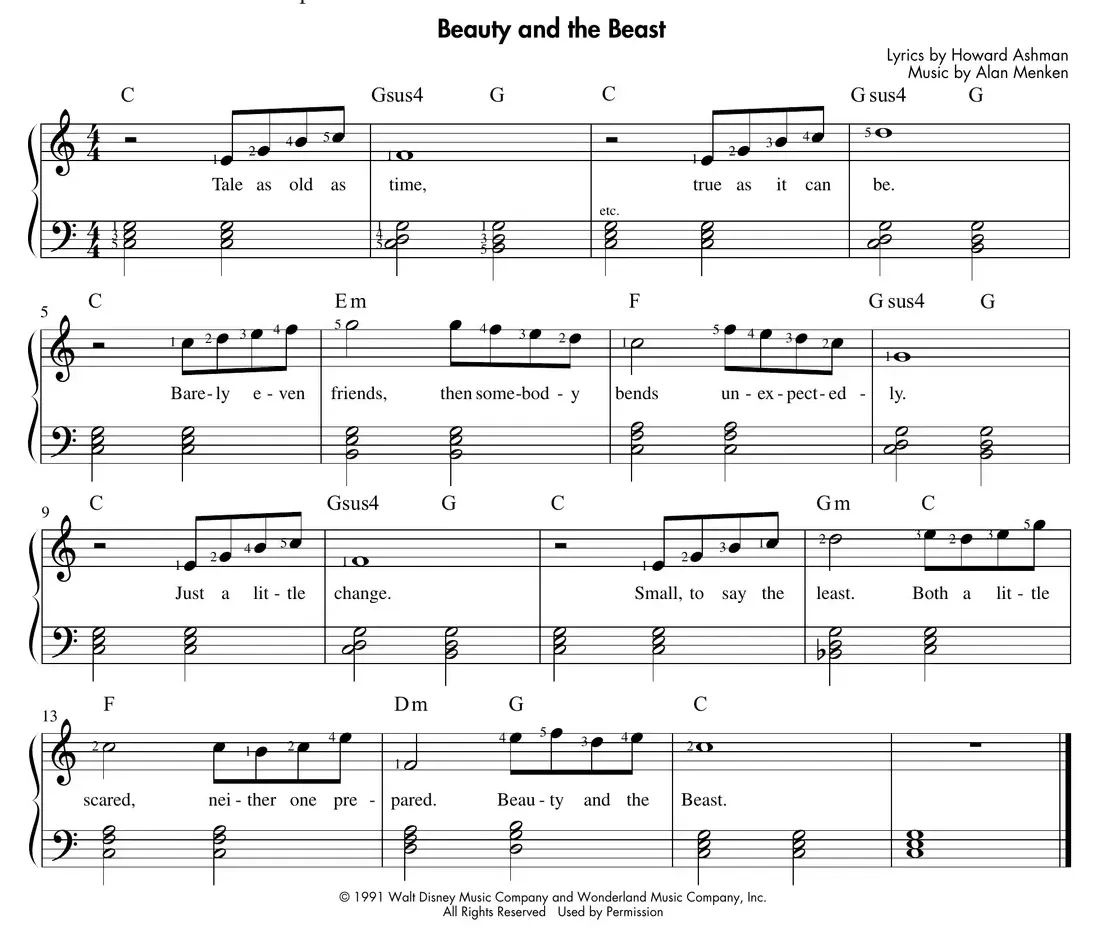
This is the same song as in Chapter 11, but now some of the left hand chords have been inverted. Isn’t this easier to play? Doesn’t it sound better—more smooth? We’ll point out a few of these inversions so you know where they came from. In measure 2, the Gsus4 chord is made up of the notes G, C, and D. We simply took the C and D from the top (as in the Chapter 11 version) and moved these two notes an octave lower. Now, when coming from the C chord in measure 1, the hand does not have to move at all. The E in the middle of the C chord simply moves to a D…sounds much more logical, right? Inversions were applied to all chords other than the C chords in order to make hand movement as small as possible. This also promotes proper voice leading as the left hand sounds more like three smooth melodic lines rather than separate chords that jump around.
Next, we’ll look at a triad progression in the left hand, to see more closely how a progression can benefit from inversions and voice leading.
Listen to track 28 to hear a series of left-hand triads in root position:

Loading audio…
Notice how this sounds rather “disjointed” because we are jumping around in root position. Now with the use of inversions, this left-hand part sounds smoother and more musical.
Listen to track 29 to hear inversions and voice leading applied to these left-hand triads:

Loading audio…
Next, we will take these inverted triads and use them to harmonize an excerpt from the famous Disney song “Can You Feel the Love Tonight,” written by Elton John:
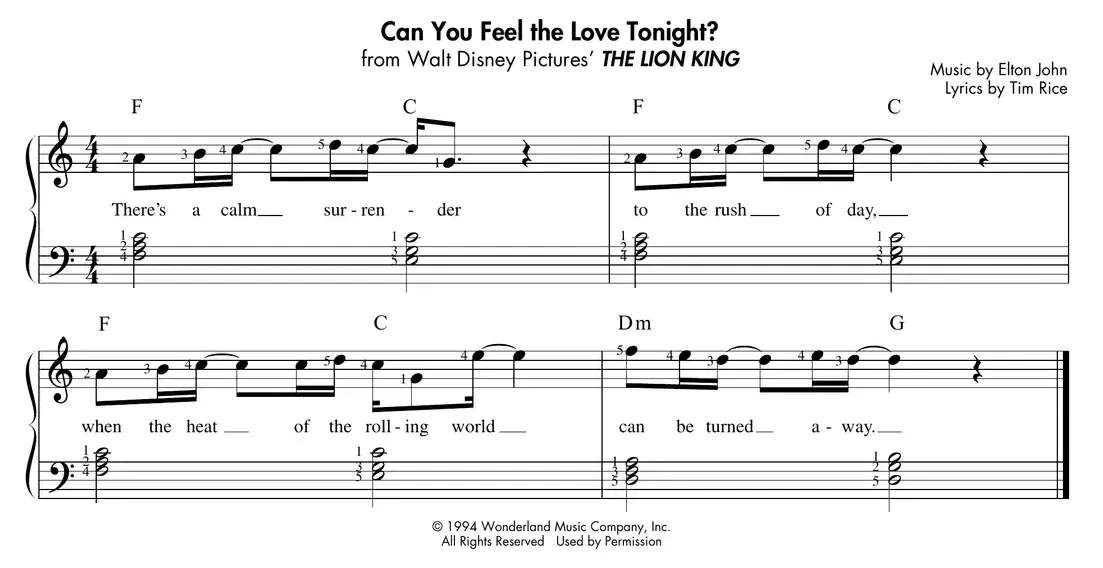
Count through the melody, which is our first example using 16th-note rhythms (review the 16th-note counting in Chapter 6 as needed), then work through it and apply the fingerings shown. When the right-hand melody is familiar, add the inverted triads in the left hand!
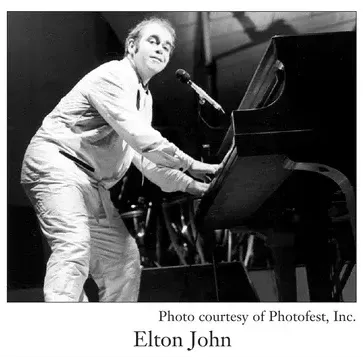
Elton John
Elton John is one of the most important pianists and songwriters of the late 20th century, hitting his peak of pop superstardom in the ’70s and ’80s. (More about Elton later on in Section 8 – Who’s Who.) In 1994, Elton co-wrote “Can You Feel the Love Tonight” with lyricist Tim Rice for Disney’s animated feature The Lion King. It won the Academy Award that year for Best Original Song. Here are ten more Elton John songs you should check out:
- Candle in the Wind
- Honky Cat
- Crocodile Rock
- I Guess That’s Why They Call It the Blues
- Daniel
- Kiss the Bride
- Don’t Let the Sun Go Down on Me
- Rocket Man
- Goodbye Yellow Brick Road
- Your Song